By: Catalina Echavarría
Modern Times
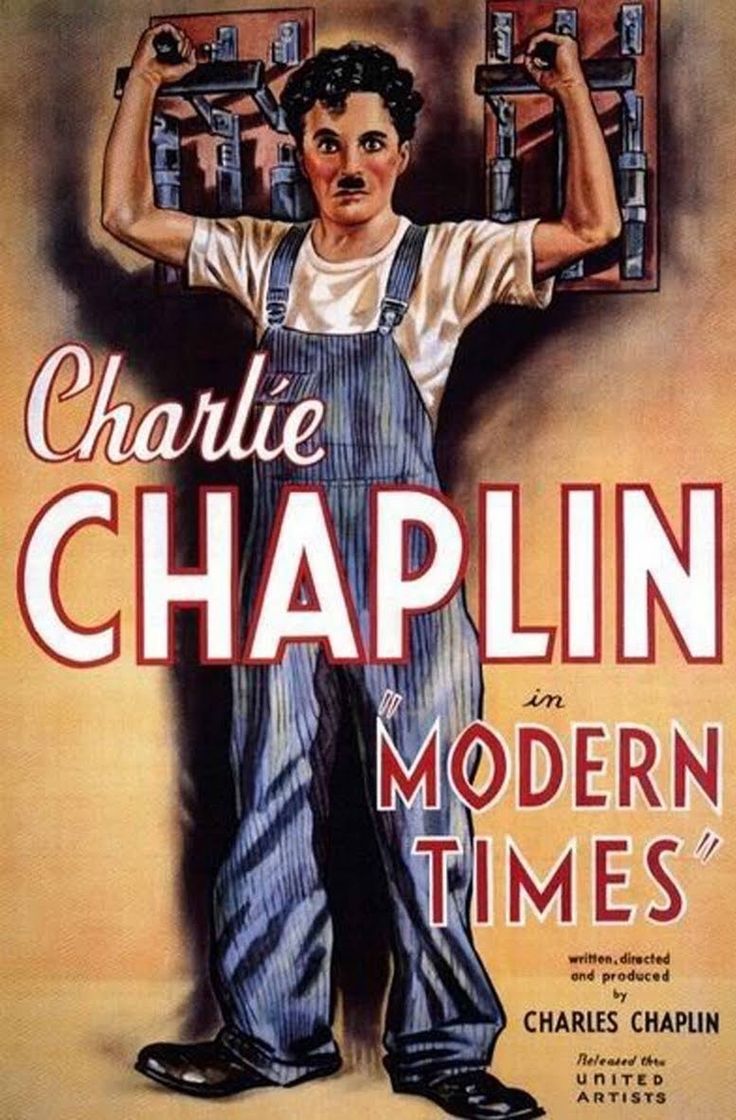
(Chaplin, 1936) is a film directed and starred by Charles Chaplin. It depicts
the hardships of a low-class worker in the industrialized Post-Depression era
in the United States of America.
Factsheet
Film Title: Modern Times
Director´s Name: Charles
Chaplin
Country: United States
of America
Year: 1936
Plot
The factory
worker (commonly known as the Tramp or Charlot in previous movies (Robinson,
1985)) screws bolts onto pieces of machinery at an ever-increasing rate, unable
to cope, he ends up being engulfed by the mechanism, halting the production
line. His task is so mechanical, that after the shift, he behaves like a robot,
mimicking the same frantic moves repeatedly. While on the factory, he serves a
guinea pig for a force-feeding machine and later suffers a nervous break-down,
ending up in a hospital.

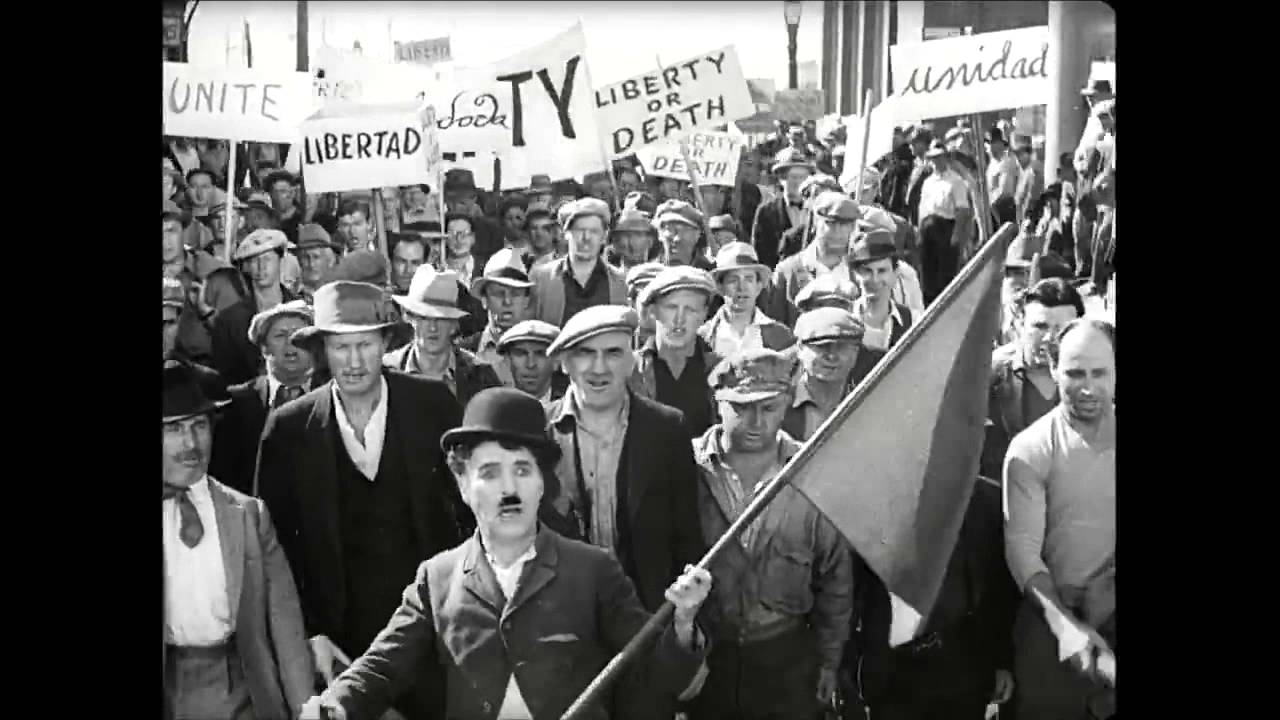
After his
discharge, he finds himself among demonstrators fighting the economic system,
and is mistaken for a communist leader, thus being arrested and sent to jail,
where he unwillingly consumes smuggled cocaine. In his delirium, he stops a
jailbreak and is regarded as a hero. “Happy in his comfortable cell” (Chaplin,
1936), he is released from prison despite his plight: “Can I stay longer? I´m
so happy here” (Chaplin, 1936).

He meets and
orphan girl (Ellen or the Gamin (Robinson, 1985)) while trying to go back to
the penitentiary, taking the blame for the bread she stole. He finally gets caught
after eating a full banquet without paying and meeting Ellen in the paddy
wagon, before she escapes and convinces him to go with her. They dream of a
better life where food and a household are granted, and he gets a job as a
watchman in a department store. Burglars break into the store and he recognizes
one of his former coworkers, Big Bill, who explains they are starving. After a merry
feast together, the Tramp is locked again.

Upon his
release, Ellen takes him to a shack by the waterfront, although she admits “Of
course it´s no Buckingham Palace” (Chaplin, 1936), they are both happy to have
a place of their own. The workers strike at the factory is finally over, and
the tramp is able to get a job again, but fails miserably as mechanic
assistant, that same day riots break out and he is jailed once more. Two weeks
later, Ellen lands a job as singer and arranges for the restaurant manager to
hire the Tramp. After dreadfully serving tables, he successfully performs as
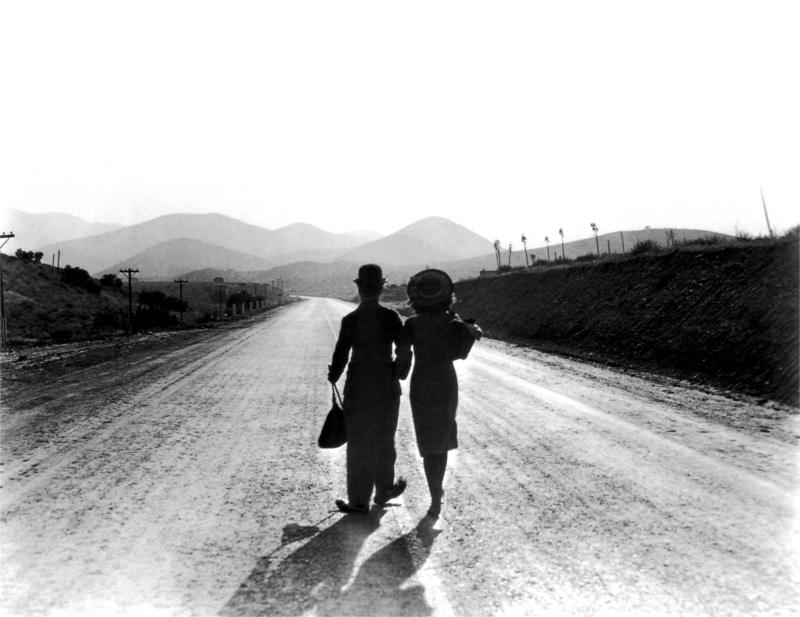
singer, but police arrest Ellen on the spot. They manage to escape and walk
down a road to an uncertain but hopeful future together.
Conceptual Analysis
Modern Times is
a film where the post Great-Depression struggles of the working class is
clearly depicted. It was Chaplin´s last “silent” movie, even though it contains
a few audible dialogues, they are all gibberish and unintelligible, which
attracted critics for being “outdated” (Robinson, 1985). There are however
written signs all along the film to highlight the most important messages given
to the audience. It is also noteworthy that all of the newspaper headlines
speak of riots, unemployment, strikes and general unease about the economic
situation.
Some scenes speak eloquently about the hardships of
the times: the waterfront kids scavenging for food and collecting rubble to
survive, the unemployed turned burglars for food, the happiness of being in jail
where basic needs are met in spite of a so-called freedom, and the obvious
analogies of the man-eating machines. The role of food is central throughout
the movie, not only because of the machines engulfing workers or force-feeding
them, but also because of the general scarcity (the Tramp, Ellen and unemployed
are on a constant battle against hunger and starvation (Stephens, 2011)).

The film is a
political comedy, highly critical of the economic system and the dehumanization
of capitalism, where workers are regarded as replaceable pieces of machinery.
The clear disparities among the upper-class and lower-class is evident
too: owners who don´t really work and
try to stay as far as possible from their employees as possible, rich ladies
who can afford delicacies and expensive fabrics, and patrons who dance among
whisky and roast duck.

Personal Analysis and Reflections
Modern Times serves
as an important reminder of the need to preserve humanity in a mechanized,
modern world; where capitalism has proven to fail at creating general welfare
and abundance for everyone; where economic inequality, the tyranny of the
machine, and the need for drugs and alcohol as a way to escape reality . It
also depicts the climate after the Great Depression, the period between the
First and Second World Wars, in which pessimism and uncertainty about the
future were ubiquitous.

Charles Chaplin
was very critical of the economic and social issues of his time, he satirizes
industrial capitalism through stark humorous and paradoxical portrayals of the
progress of laissez-faire economic policies. The opening sequence, in which a
herd of sheep are juxtaposed with workers heading to the factory, symbolizes
the subordination to the economic system: confined to a pen (the factory),
surrounded by fences, relying on incentives for their livelihood, and knowing
they have been domesticated to be replaceable (Connerly, 2009).

References:
Chaplin, C
(Director & Producer). (1936). Modern Times [Film]. United
States of America: United Artists. Available at: https://www.youtube.com/watch?v=_jLHVT0-GgM
Connerly,
A. (2009). Charlie Chaplin´s Modern Times
and the Abstraction of Labour. Available at: https://aconerlycoleman.wordpress.com/2009/11/17/draft-charlie-chaplins-modern-times-and-the-abstraction-of-labour/
Robinson, D. (1985). Chaplin:
his Life and Art. London: McGraw-Hill.
Stephens, G. (2011).
Biting Back at the Machine: Charlie Chaplin´s Modern Times. Melbourne: Senses
of Cinema. Available at: http://sensesofcinema.com/2011/feature-articles/biting-back-at-the-machine-charlie-chaplins-modern-times/

No comments:
Post a Comment